
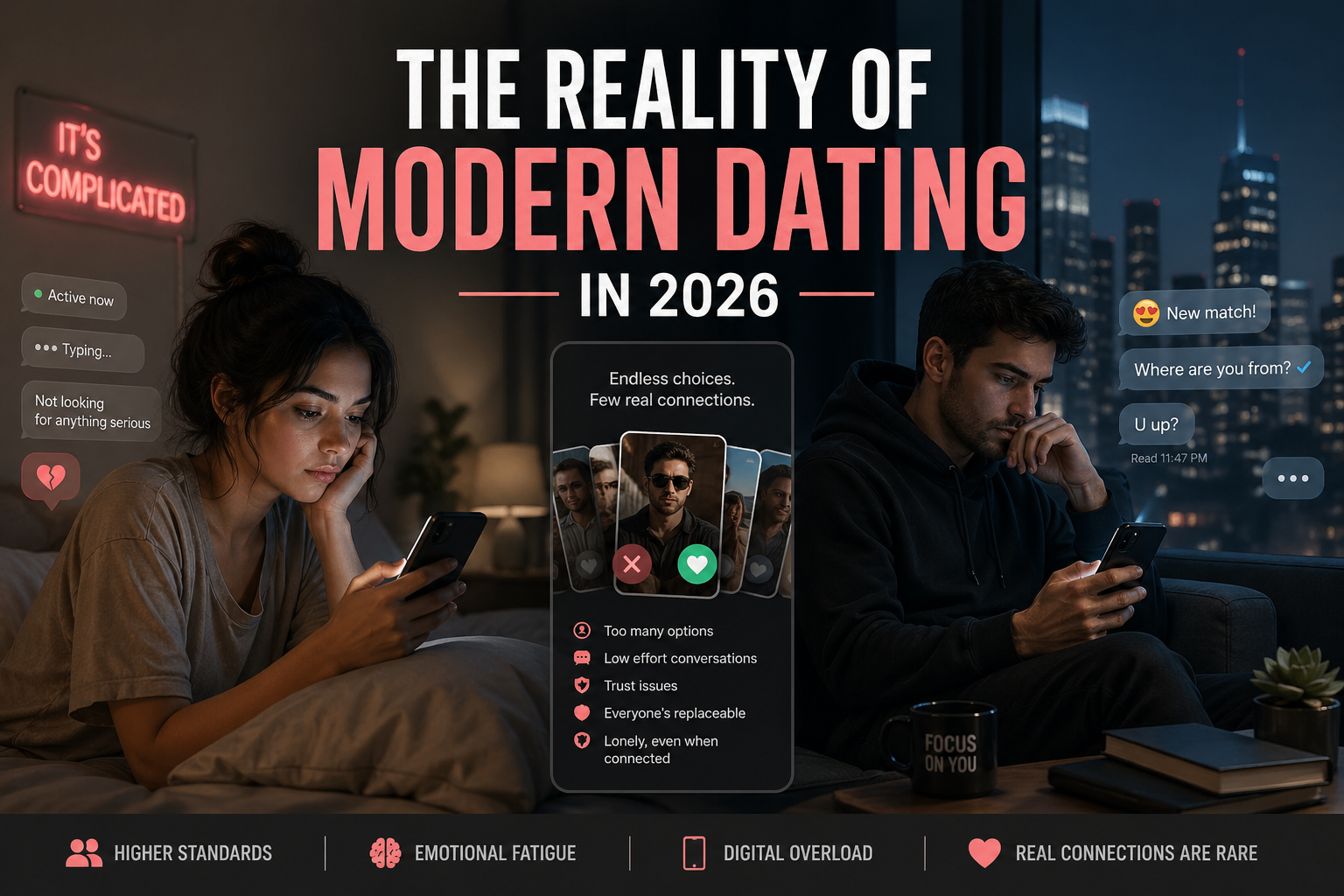
Dating in 2026 looks very different from what it was even a few years ago. Technology, social media, changing mindsets, and fast-paced lifestyles have completely reshaped how people meet, connect, and build relationships. While it has become easier than ever to find someone new, it has also become harder to build something real and lasting.
In this article, we will explore the reality of modern dating in 2026, including its advantages, challenges, and what people truly experience in today’s relationship world.
1. Dating Has Gone Fully Digital
One of the biggest changes in modern dating is that most connections now start online. Dating apps, social media platforms, and even gaming communities have become common places to meet new people.
Apps allow users to swipe, match, and chat instantly. This has made dating faster and more accessible. You no longer need to meet someone through friends or social gatherings only.
However, this convenience has also created a problem—too many choices. When people see endless profiles, they often struggle to commit. There is always a feeling that “someone better might be one swipe away.”
2. The Rise of “Instant Connections”
In 2026, people are used to instant results. Messages, replies, and attention are expected quickly. This mindset has also entered dating.
Many relationships start fast, with strong emotional intensity in the beginning. People talk daily, share personal feelings quickly, and sometimes even call it “love” within days or weeks.
But the problem is that fast connections often fade fast too. When the initial excitement disappears, many people realize they didn’t actually build a strong emotional foundation.
3. Commitment Has Become More Complicated
In earlier times, relationships often moved toward commitment naturally. Today, commitment feels more complicated.
People now focus on:
- Personal goals
- Career growth
- Financial independence
- Mental health
- Freedom and space
Because of this, many individuals hesitate to fully commit. They fear losing independence or making the wrong choice.
As a result, situationships—undefined relationships—have become very common. People act like a couple but avoid labeling the relationship.
4. Social Media Affects Relationships Deeply
Social media plays a huge role in modern dating. While it helps people stay connected, it also creates pressure and misunderstandings.
Some common issues include:
- Comparing your relationship with others
- Overthinking likes, comments, and online activity
- Trust issues due to online interactions
- Seeking validation through public posts
In many cases, relationships are not only lived privately but also “performed” publicly. This can create unrealistic expectations and emotional stress.
5. Emotional Availability Is Rare
One of the biggest challenges in 2026 dating is emotional availability.
Many people are:
- Emotionally guarded due to past experiences
- Afraid of getting hurt
- Focused on short-term connections
- Not ready to open up fully
Because of this, deep emotional bonding takes longer than before. Even when people like each other, they often hesitate to express their true feelings.
6. Ghosting and Disappearing Culture
Ghosting—suddenly cutting off communication without explanation—has become a common part of modern dating.
Instead of having difficult conversations, some people simply disappear. This can leave the other person confused, hurt, and emotionally affected.
The ease of online communication has unfortunately made it easier to avoid responsibility in relationships.
7. High Expectations, Low Effort Problem
Another reality of dating in 2026 is the imbalance between expectations and effort.
Many people want:
- Perfect partner
- Strong emotional support
- Constant attention
- Loyalty and understanding
But at the same time, they may not give the same level of effort in return.
This mismatch creates frustration and disappointment in many relationships.
8. Mental Health Awareness Is Growing
On a positive side, people in 2026 are more aware of mental health than before. Many individuals now understand:
- Toxic relationships
- Emotional manipulation
- Boundaries
- Self-worth
People are less willing to stay in unhealthy relationships just for the sake of being in one.
This shift is helping many individuals choose better partners and prioritize emotional well-being.
9. Long-Distance Relationships Are More Common
Because of online dating and global connectivity, long-distance relationships are now more common than ever.
People from different countries and cultures connect easily. While this is beautiful, it also comes with challenges like:
- Time zone differences
- Lack of physical presence
- Trust issues
- Communication gaps
Successful long-distance relationships require strong trust and consistent communication.
10. The Fear of Rejection Is Still Strong
Even in a digital world, rejection remains one of the biggest emotional fears.
People often:
- Overthink messages
- Delay confessing feelings
- Avoid expressing interest clearly
This fear can prevent many real connections from forming.
11. Hookup Culture vs Real Love
Modern dating also includes a strong divide between casual relationships and serious relationships.
Some people prefer casual dating or short-term connections, while others look for long-term commitment.
The challenge is that sometimes both people in a connection want different things, leading to confusion and emotional pain.
Understanding intentions early has become more important than ever.
12. What People Really Want in 2026
Despite all changes, human needs in relationships remain the same. Most people still want:
- Love
- Respect
- Emotional safety
- Loyalty
- Understanding
Technology may have changed the way we date, but not the emotional needs behind it.
Conclusion
The reality of modern dating in 2026 is both exciting and complicated. On one hand, it offers more opportunities to meet people than ever before. On the other hand, it has made relationships more confusing, fast-moving, and emotionally challenging.
Success in modern dating is no longer just about finding someone—it is about understanding yourself, communicating clearly, and choosing someone who matches your emotional values.
In the end, no matter how advanced dating becomes, real connection will always depend on honesty, patience, and emotional depth.